Thinking about making the jump to an EV but confused by the battery options? You aren’t alone. Today, we’re breaking down the two main players in the market. Choosing between Lithium Iron Phosphate (LFP) and Ternary Lithium (NCM) is like choosing a partner: neither is “perfect,” it’s all about whose “personality” fits your lifestyle best.
1. Get to Know the Personalities
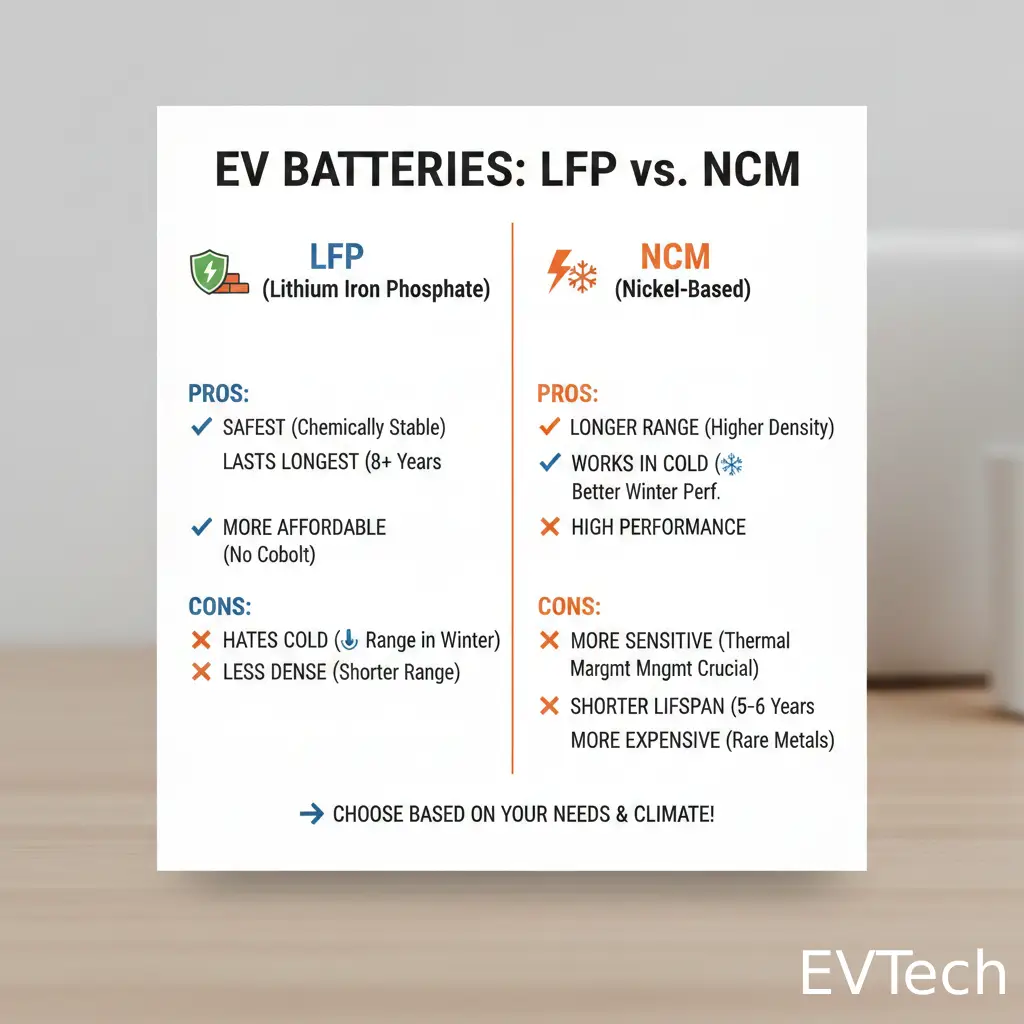
LFP (Lithium Iron Phosphate): The Reliable Workhorse
- The Vibe: Safe, durable, and budget-friendly.
- The Pros:
- Maximum Safety: This is LFP’s biggest selling point. It’s chemically stable—think of it as a fireproof brick. Even in a collision, it’s extremely unlikely to catch fire. It’s the peace-of-mind choice for families.
- Long Lifespan: These batteries can handle significantly more charge cycles. If you plan on keeping your car for 8+ years or drive high mileage daily (like Uber/Lyft), LFP will degrade much slower.
- Better Value: Because they don’t use expensive metals like cobalt, these cars are usually cheaper to buy.
- The Cons:
- Cold Sensitive: This is the Achilles’ heel. In freezing winters, the range can drop significantly—sometimes by 30-40%.
- Lower Energy Density: They are heavier and hold less power for their size, though tech improvements are closing this gap.
NCM (Ternary/Nickel-Based): The High-Performer
- The Vibe: High energy, cold-resistant, and powerful.
- The Pros:
- Longer Range: These batteries pack more “juice” into the same space, giving you those high-mileage numbers that kill range anxiety.
- Winter Warrior: They handle the cold much better than LFP, making them a must-have for snowy climates.
- Better Performance: Higher voltage usually translates to better acceleration and power output.
- The Cons:
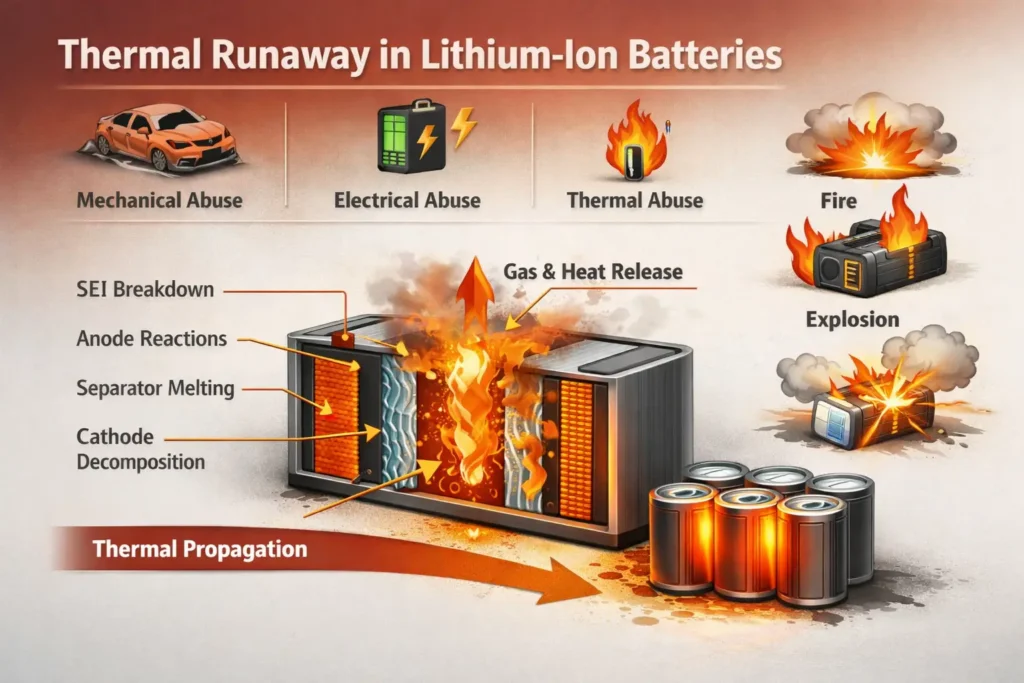
- Sensitivity: They are more chemically active and sensitive to high heat. While modern cooling systems make them very safe, they technically have a higher risk profile than LFP.
- Shorter Cycle Life: They don’t last quite as long as LFP (though still plenty for most users). Pro tip: Only charge to 80-90% for daily use to save the battery.
- Higher Cost: Use of precious metals makes these cars more expensive.
2. How to Choose? Ask Yourself These 4 Questions:
Q1: Do I live in a “Snow Belt” or the “Sun Belt”?
- Warm/Moderate Climates: Go with LFP. You won’t deal with the “cold-weather tax” on your range, and you’ll save money.
- Cold Climates (The North/Midwest): NCM is the clear winner here. You’ll appreciate the consistent performance when the mercury drops.
Q2: What is my daily driving habit?
- City Commuter w/ Home Charging: LFP is a perfect match. If you plug in every night, a slightly shorter range doesn’t matter, and you benefit from the safety and cost savings.
- Road Tripper / No Home Charger: NCM is vital. You need the extra range to minimize stops and the faster “buffer” for public charging.
Q3: Longevity vs. Safety: What’s the priority?
- If you want a car that lasts 10+ years or prioritize absolute chemical safety, choose LFP.
- If you plan to trade the car in after 5 or 6 years, the lifespan difference won’t really affect you—go with whichever fits your driving needs.
Q4: What is my budget?
- Strict Budget: LFP models are almost always the entry-point for better value.
- Flexibility: If you can afford the premium, NCM offers that “top-tier” performance and range.
The Bottom Line
- Choose LFP if: You want a safe, long-lasting, “forever” car for city driving in a warmer climate.
- Choose NCM if: You live in the cold, drive long distances, and want the best performance available.
One final reminder: The battery is the heart, but the BMS (Battery Management System) is the brain. A great car manufacturer can use software to make an LFP battery better in the cold or an NCM battery safer. Always check the brand’s reputation for tech and thermal management!