In the world of New Energy Vehicles (NEVs), continuous breakthroughs in battery technology serve as the primary engine for industry growth. Currently, Lithium Iron Phosphate (LFP) and Ternary Lithium (NCM) are the two dominant chemistries, each offering a unique set of strengths and trade-offs.
This article evaluates these two contenders across four critical dimensions: energy density, safety, cold-weather performance, and cycle life, providing a comprehensive look at how they perform in the real world.
1. Energy Density: The NCM Advantage
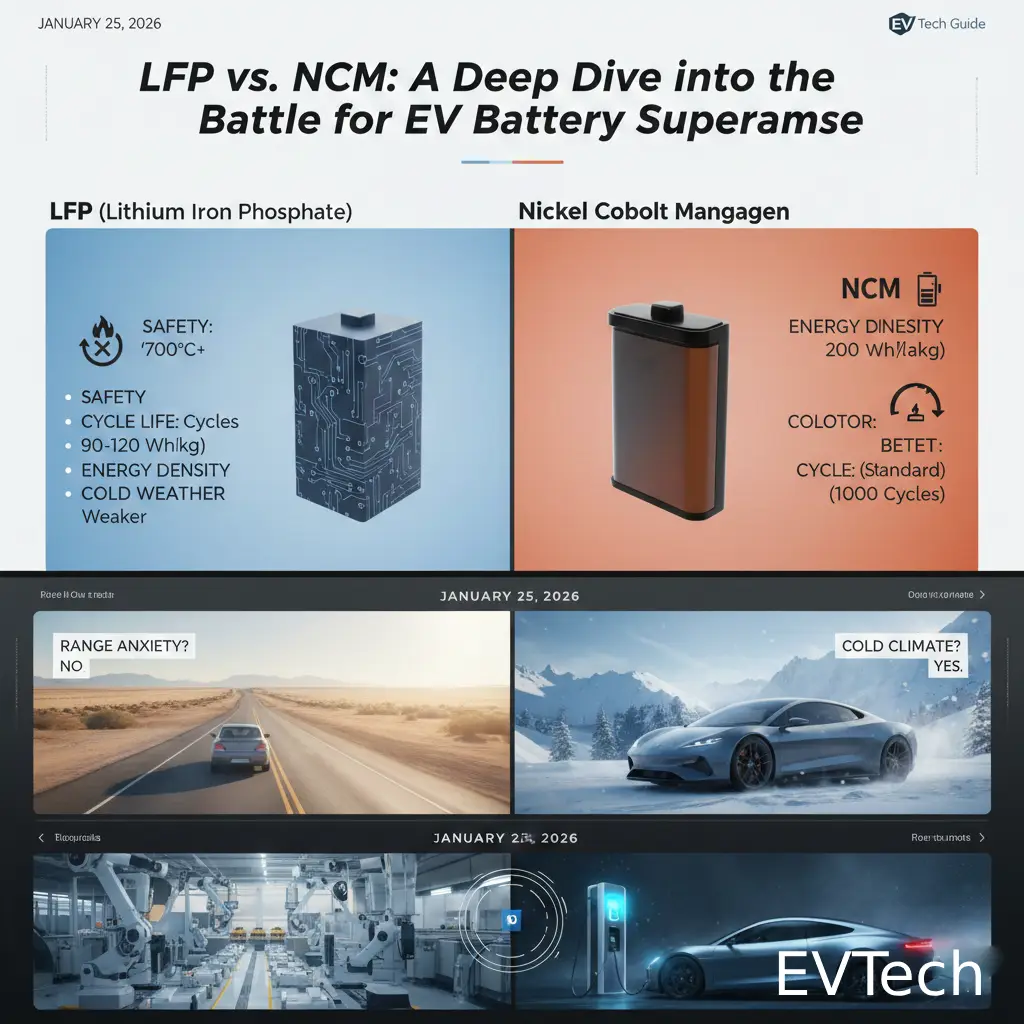
Energy density measures how much energy a battery can store relative to its weight, which directly dictates an EV’s driving range. There is a stark contrast between LFP and NCM in this category. Currently, LFP cells typically hover between 90–120 Wh/kg, whereas NCM cells can reach approximately 200 Wh/kg.
This higher density means that for the same weight or volume, an NCM battery can store significantly more power, enabling longer ranges. This is a “make-or-break” feature for drivers who prioritize long-distance travel and fewer charging stops. However, higher energy density often comes with increased safety challenges, which we will explore below.
2. Safety: The Stability of LFP
Safety is the most critical pillar of battery tech, especially in EVs where passenger protection is paramount. The fundamental difference here lies in thermal stability.
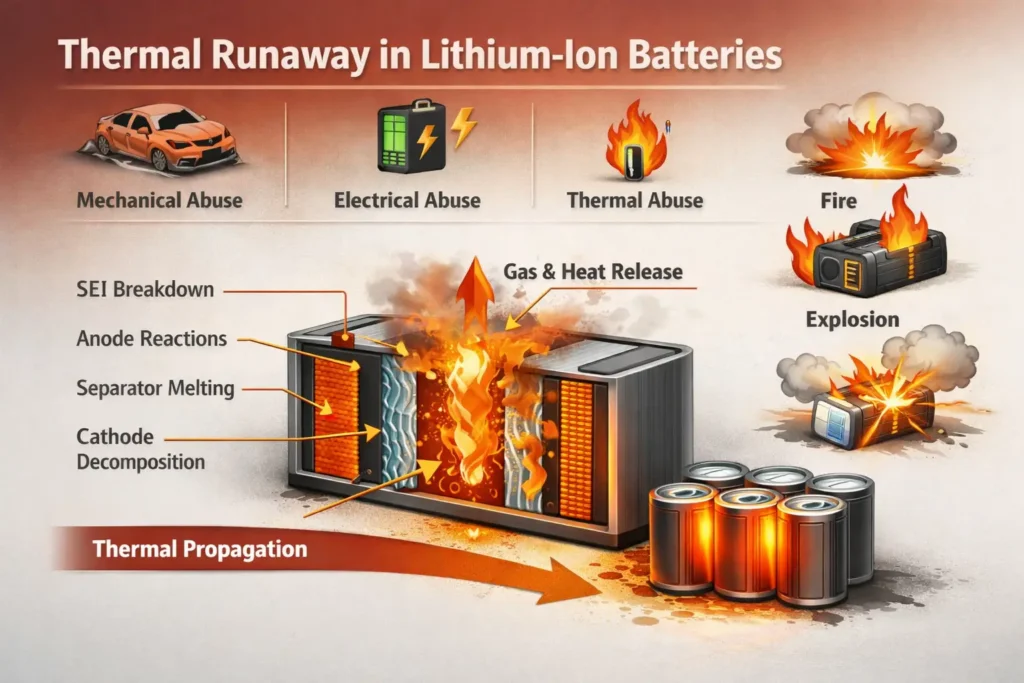
NCM cathode materials begin to decompose at around 200°C (392°F). In contrast, LFP materials remain stable up to roughly 700°C (1,292°F). This means that in extreme scenarios—such as a short circuit or overheating—LFP batteries are far more resilient and less likely to experience thermal runaway (battery fires). Laboratory tests show that under identical short-circuit conditions, LFP cells rarely ignite. While NCM batteries include sophisticated safety mechanisms, their inherent chemistry is more sensitive to high temperatures.
3. Cold-Weather Performance: NCM’s Edge in the Frost
While both batteries perform similarly in mild weather, their paths diverge when the temperature drops. In the cold, chemical reactions slow down, leading to “range anxiety” as capacity temporarily dips—a phenomenon known as low-temperature degradation.
LFP batteries struggle significantly more in freezing conditions. NCM batteries, however, maintain much higher activity in their electrolytes and cathodes at low temperatures, offering more reliable range and charging efficiency in winter. For drivers in northern climates, NCM is often the more dependable choice.
Note: This gap can be narrowed by an advanced Battery Management System (BMS). Technologies like pre-heating and thermal insulation help mitigate cold-weather loss for both battery types.
4. Cycle Life: LFP’s Remarkable Longevity
When it comes to long-term value and durability, LFP is the clear winner. A typical LFP battery can handle 2,000+ charge cycles before significant degradation, while NCM batteries generally last around 1,000 cycles.
A longer cycle life means the battery will likely outlast the vehicle itself, reducing the total cost of ownership and the frequency of expensive replacements. Additionally, longer-lasting batteries mean fewer units end up in the recycling stream, making LFP a more environmentally sustainable option over the long haul.
The Verdict: Choosing the Right Tool for the Job
Ultimately, there is no “best” battery—only the best battery for your needs.
- Choose NCM if you prioritize long-range travel, high performance, or live in a cold climate.
- Choose LFP if you value maximum safety, long-term durability, and cost-effectiveness.
As technology evolves, we may see a “holy grail” solution that combines the best of both worlds. For now, understanding these trade-offs is the key to making an informed decision in the rapidly evolving EV market.